
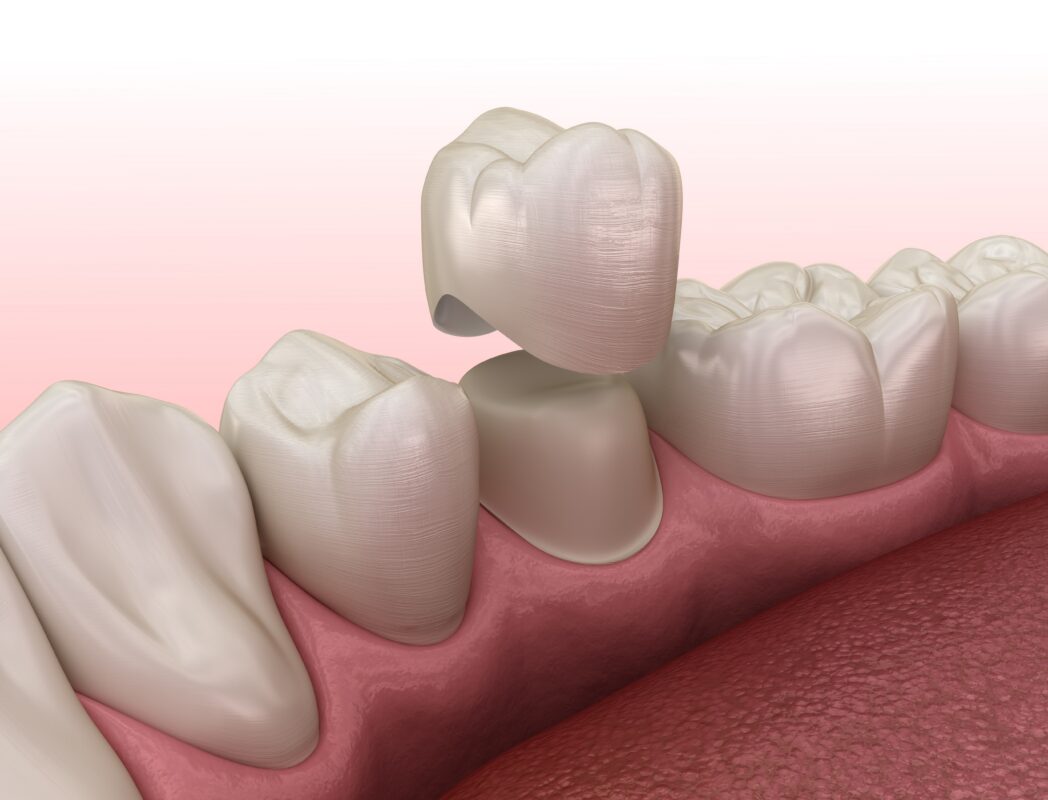
Did you know that as many as one in five adults have at least one untreated cavity? If you’re one of those people and you’re ready to take the next step, you may wonder whether you’ll need a crown or if a dental filling is enough. The right choice between a crown vs. filling depends on how much healthy tooth remains.
As an Emeryville restorative dentist, Dr. Rose Magno wants to preserve as much natural tooth structure as possible. When decay affects only a small part of the tooth, Dr. Magno will remove the decay and restore the tooth with a filling. However, when substantial tooth structure has been lost, a dental crown can rebuild the tooth.
Filling vs. Crown: What’s the Difference?
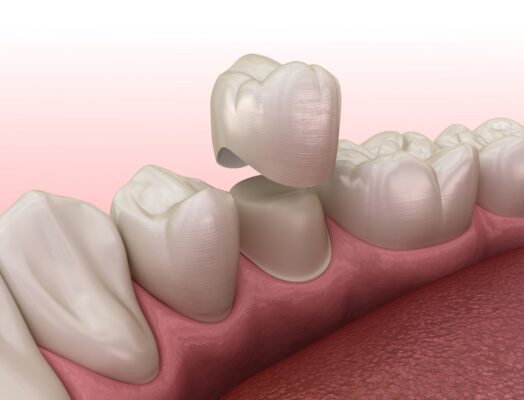 A filling replaces a smaller area damaged by decay, while a crown covers and reinforces more of the tooth when substantial structure has been lost. The right treatment for decay depends on the tooth’s overall condition, not just the cavity.
A dental filling is typically enough when a tooth has small to moderate decay and plenty of strong tooth structure remains after Dr. Magno removes the decay. The tooth should have no major cracks or weakened cusps, or the raised points on its chewing surface.
Patients often need a crown when damage is too extensive for a filling to stay in place. A dental cap may also make sense if you have a broken tooth and not enough tooth structure left to hold a regular filling.
If the cavity is large or involves several tooth surfaces, or if a large existing filling has already weakened the tooth, you may need a crown.
How Dr. Magno Decides Between a Crown vs. a Filling
Dr. Magno considers several factors when deciding between a crown vs. a filling:
- Remaining tooth structure: How much healthy tooth will remain after the decay is removed?
- Cracks or weakened areas: Does the tooth need protection beyond replacing the missing material?
- Previous dental work: Has a large existing filling left the tooth with limited support?
- Tooth location: How much chewing pressure does the tooth need to withstand?
If damage is minimal, a dental filling might work for you. However, the least extensive treatment isn’t automatically the best. An oversized filling in a weakened tooth may fail or leave the tooth vulnerable to fracture.
What To Expect From the Dental Filling or Crown Process
Here’s a quick look at what to expect from each process:
Dental filling: To treat a tooth with a dental filling, first, Dr. Magno removes the decay. Then she places tooth-colored composite resin in the prepared area and hardens it with a special curing light. Finally, she shapes and polishes the restoration, then checks that it aligns well with your bite.
Dental crown: To prepare for a dental crown, Dr. Magno removes decay and reshapes the tooth by shaving off a small amount of healthy enamel. This creates room for the cap to fit securely. Then, she takes an impression or digital scan to customize a crown to fit. Next, she places a temporary crown while the dental lab fabricates the final restoration. At a later appointment, she removes the temporary crown, checks the final crown’s fit, and cements it in place.
Both treatments restore the tooth, but a crown requires reshaping the tooth to make room for the restoration.
When you come in to her practice for a visit, Dr. Magno will explain what to expect from your dental restoration, whether you receive a crown or a dental filling.
Learn More at an Affordable Consultation
Whether your tooth needs a dental crown or a filling depends on how damaged it is. When you visit her practice, Dr. Magno can evaluate the damage and review any previous dental work. She will recommend the best option for a lasting restoration that helps you keep your tooth in good shape for years to come.
As a restorative dentist trusted by the East Bay area for over 25 years, Dr. Magno wants to help you overcome tooth decay with the right treatment for you. Text or call her office at (510) 591-0091 to schedule an affordable consultation.

 English
 Spanish